

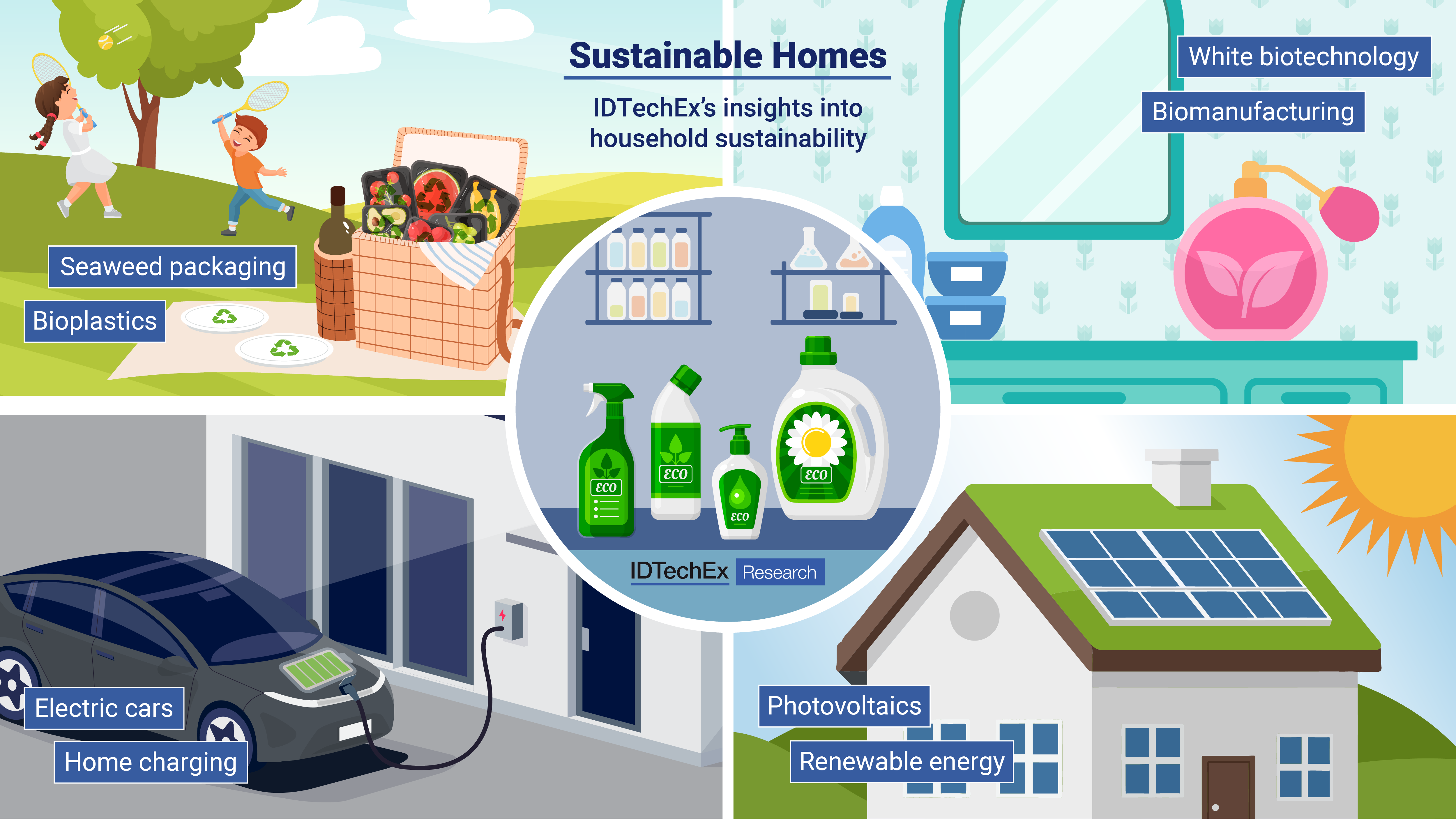
Living in a home that harnesses the power of nature is becoming increasingly possible. Sourcing power from solar energy and using bioplastics and chemicals made from bio-sources, are just some examples of how sustainable switches in everyday life could contribute to a healthier environment. IDTechEx's portfolio of Sustainability Research Reports and Subscriptions is home to the latest research into the sectors prioritising sustainability.
Source: IDTechEx.
Powering home appliances with the sun
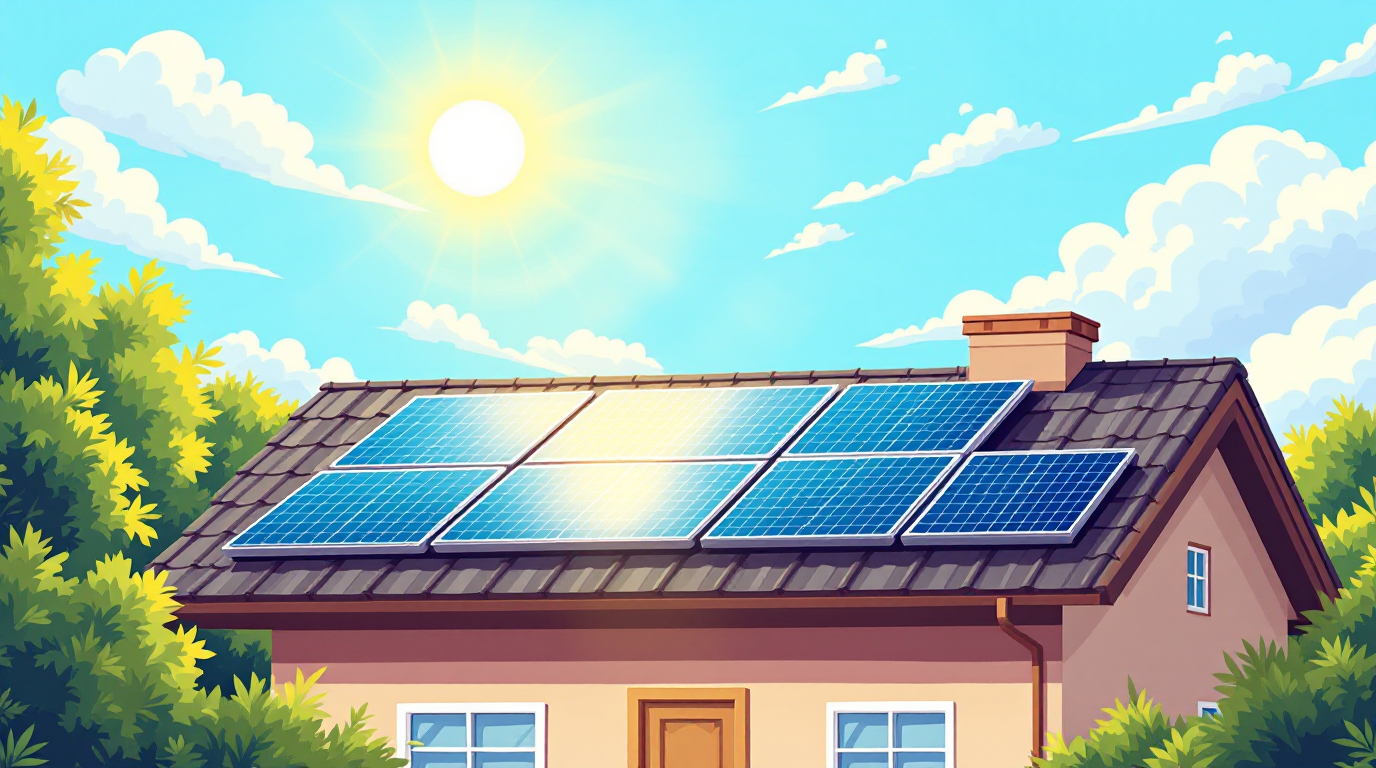
Watching the TV or turning on the lights can be the product of harnessing sunlight with the implementation of photovoltaic technology and its integration into a home's energy system. IDTechEx's report, "Perovskite Photovoltaics 2027-2037: Technologies, Markets, and Trends", explores some of the most recent solar power technologies, including the use of perovskites.
Perovskites are a group of materials with a specific material, with the particular perovskite used in photovoltaic applications being known for specific electronic and optical properties. The development of deposition techniques for perovskite, including thin-film methods such as sheet-to-sheet or roll-to-roll, make it ideal for scalability prospects, automation, and streamlining. Perovskite is known within the photovoltaic industry for high efficiency and performances similar to silicon photovoltaics, though comes with some stability challenges outlined within IDTechEx's report. Perovskites can therefore be used as a performance enhancer alongside traditional silicon technologies.
The use of solar panels globally is becoming increasingly attractive as one means to decarbonize the energy sector, and to provide a means of generating renewable energy that can be used to power all kinds of appliances within the home. Despite initial instalment costs, solar technology could also be a long-term solution to high energy costs.
Source: IDTechEx.
EVs and lowering fossil fuel reliance
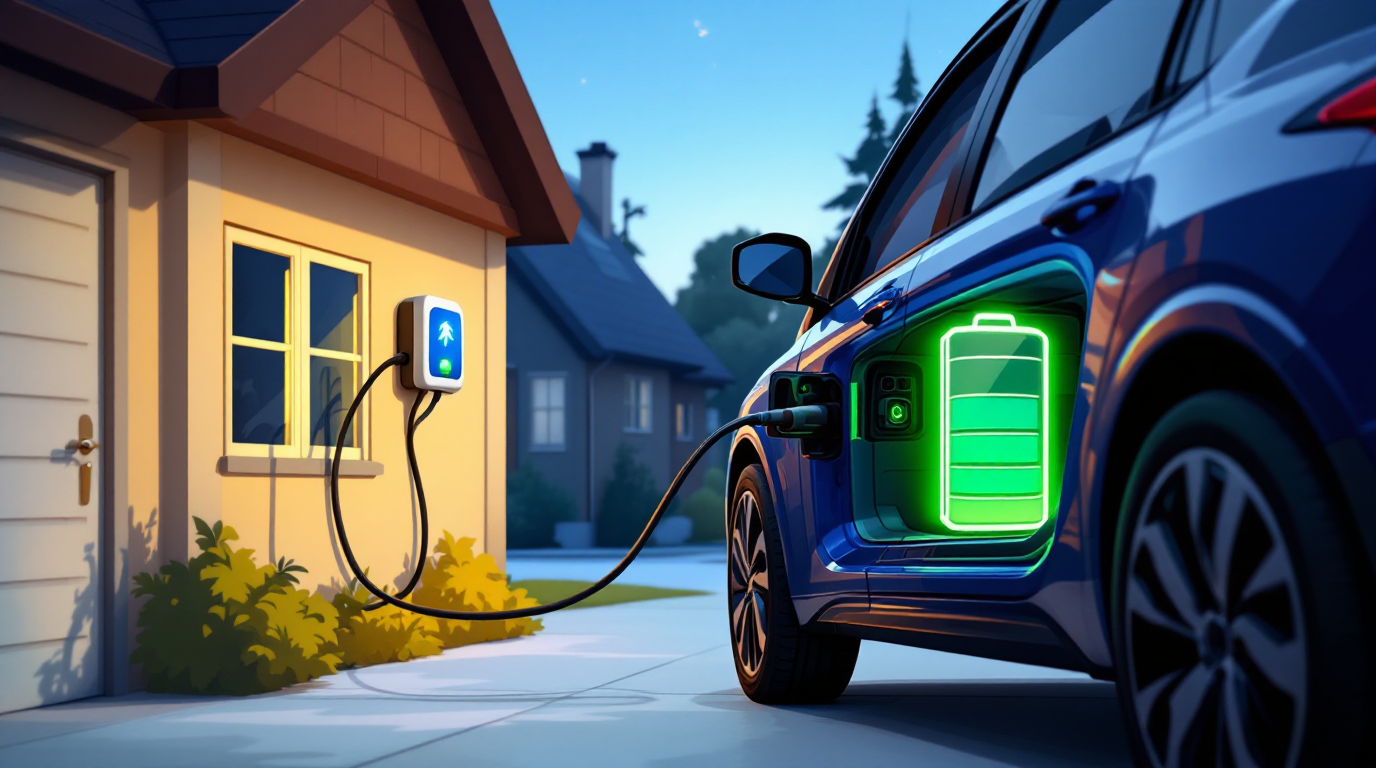
Renewable energy like solar could not only power main appliances within the home but help support an at-home electric vehicle recharging station. This could contribute to lowering the household carbon footprint by using electricity generated by the sun rather than relying on the grid. Driving an electric car to and from work or to run errands could drastically reduce the number of emissions being produced on short everyday journeys and have significant benefits on the environment as the switch is made from traditional ICE vehicles around the world, particularly in China, the USA, and Europe, where the highest number of electric car sales are made.
Electric vehicles in general have been an up-and-coming way to decarbonize the transport sector for some time, with regulations and incentives to drive their uptake having been implemented globally by governments to encourage a move away from fossil fuel reliance. Electric cars in particular makeup the largest electric vehicle segment in terms of battery demand and value, with 70 million electric passenger car sales expected in 2045, up from 14.4 million in 2023, representing a compound annual growth rate of 9.8% between these years.
Plug-in hybrid (PHEV), fuel cell electric (FCEV), and other types of alternatives to fully electric vehicles are also on the horizon in an effort to decarbonize the industry, though none currently provide much competition with battery electric. IDTechEx's portfolio of Electric Vehicles Research Reports and Subscriptions covers the entire electric vehicle market, from passenger cars to trucks and micro EVs.
Source: IDTechEx.
Bio-sourced chemicals
Inside the home, makeup and detergents can be manufactured from microorganisms and natural sources, rather than originating from fossil fuels. White biotechnology is one branch of biotechnology that uses living cells and microorganisms as feedstocks to produce things like cosmetic additives, chemicals, and textiles, meaning everyday items could be created with natural sources to support overall household sustainability.
With the increased uptake of white biotechnology, or industrial biomanufacturing, many sectors are hoping to improve sustainability and achieve carbon-neutral goals, so carbon footprints could start to decrease. Reductions in the harmful environmental effects of the traditional manufacturing and end of life processes of many products could also be a possibility. IDTechEx's report, "Biomanufacturing Specialty Chemicals 2026-2036: Technologies, Markets, Players, Forecasts", covers speciality chemicals in particular, which are high-value products with specific characteristics and performance qualities.

Source: IDTechEx.
Bioplastic picnics and packaging
Disposable plates and cutlery made from seaweed could be the next thing for making picnics and general food packaging more sustainable. With many bioplastics being biodegradable, they can contribute to a circular plastic economy where they can decompose and then be used for the production of the next round of bioplastics as feedstock. Within the home, non-biodegradable bioplastics could also make a difference to decarbonizing the plastics sector, as they are still made with natural feedstocks as opposed to being of fossil fuel origins. IDTechEx's report, "Bioplastics 2026-2036: Technology, Market, Players, and Forecasts", states that over 99% of plastics are still made from monomers derived from petrochemicals, meaning the industry has a long way to go to reduce its carbon footprint and improve its sustainability.
Alternative bioplastics such as PLA and PHAs are biodegradable types of bioplastics, which are chemically and mechanically different to traditional plastics. These types, while offering great benefits, are costly to produce and may struggle to compete. 'Drop-in' bioplastics, on the other hand, are non-biodegradable types, made using biomass feedstocks which are chemically identical to fossil fuel feedstocks. These bioplastics have the same mechanical properties as regular plastics, meaning they can use existing production methods.
For more information on sustainable innovations across a wide number of sectors including energy, transportation, and plastics, visit IDTechEx's portfolio of Sustainability Research Reports and Subscriptions for the latest research.
